Speed directly impacts online conversion. Telemetry from Google and Amazon indicates that every 100 milliseconds of latency can reduce conversion rates by up to 7%. If international visitors experience a 2-second delay while an AI translates your catalog on the fly, they bounce.
TranslateBeam TDN uses a multi-tier caching hierarchy to keep edge delivery under 15ms and eliminate translation bottlenecks.
The two-tier caching architecture
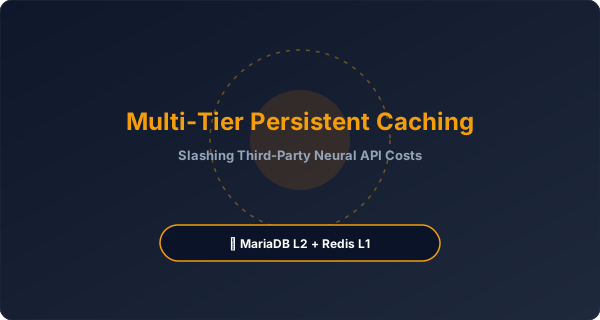
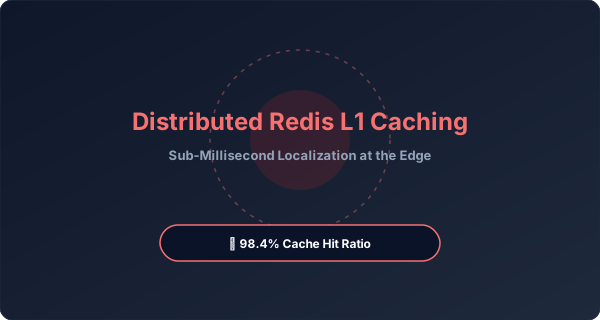
- Tier 1: Redis In-Memory Edge Cache (L1): Active translation pairs reside in Redis RAM using optimized key-value hashes. Lookup operations take less than 1 millisecond. When a visitor requests a Japanese page, over 98% of text strings serve immediately from memory.
- Tier 2: Relational MariaDB Persistent Store (L2): The long-term durable database where translations and manual editorial overrides are archived with transactional integrity.
Hash normalization
Websites repeat identical phrases across hundreds of pages: navigation links like "Home", "Pricing", "Sign In", and footer legal notices. TranslateBeam TDN normalizes text segments and computes a SHA-256 hash for each unique string.
A recurring phrase is translated exactly once. Subsequent requests across thousands of URLs hit the Redis L1 cache directly, cutting external API costs by up to 95% and guaranteeing phrasing consistency across the entire platform.
Cache invalidation and purging
When you update pricing or release new product features, translated pages must update immediately. The TranslateBeam TDN dashboard provides granular cache purging controls: purge a single language, a specific URL route, or the entire site cache with a single API call.